

Department
Political Science
Introduction to Political Science
About the Department
The Department of Political Science is one of the pioneer departments of Plateau State University, established in the 2010/2011 academic session. Now part of the Faculty of Social Sciences, the Department attained full accreditation in the 2017/2018 session and offers a complete pathway in the discipline — the B.Sc. in Political Science alongside NUC-approved M.Sc. programmes in Public Administration, Political Economy and Development Studies, and International Relations and Strategic Studies, and a PhD. Students learn from an experienced team of political scientists and graduate ready for careers in government, diplomacy, policy, research and civil society. The Department is led by Assoc. Prof. Ishaku Bitrus Lere.
Semesters — B.Sc. Political Science
Academic Staff
Degree Levels — B.Sc · M.Sc · PhD
Program Summary
-
Study Level
B.Sc. Political Science -
Study Duration
8 Semesters -
Mode of study
Full-time - Tuition per session
-
Established
2010/2011 -
Email
polscience@plasu.edu.ng
Admission Requirements
Entry Requirements — B.Sc. Political Science
UTME — 100 Level
For the four-year degree programme: Senior Secondary School Certificate (SSCE/NECO) or equivalent with credit passes in five subjects, including English Language, Mathematics and History or Government, together with an acceptable pass in the UTME.
UTME Subjects
English Language, Mathematics, Government or History, and any other subject relevant to the field.
Direct Entry — 200 Level
For the three-year programme: five credit passes in GCE/SSCE/NECO or equivalent, at least two of them at Advanced Level (subjects may not be counted at both levels). Ordinary-level credits must include English Language and Mathematics, or credits in IJMB Use of English and IJMB Mathematics.
COURSE CODE | COMPULSORY COURSES | FIRST SEMESTER CREDITS | SECOND SEMESTER CREDITS |
SSC 111 | Introduction to Social Science Statistic 1 | 2 | - |
POL 101 | Introduction to Political Science | 3 | - |
POL 105 | Nigerian Constitutional Development | 2 | - |
POL 104 | Nigerian Legal System | 2 | - |
POL 123 | Introduction to African Politics | - | 3 |
POL 125 | Organization of Government: Citizenship and the State | - | 3 |
SSC 121 | Introduction to Social Science Statistics II | - | 2 |
ELECTIVES | |||
PSY 112 | Introduction to Psychology | 2 | 2 |
SOC111 | Introduction to Sociology | 2 | 2 |
ECO 112 | Introduction to Economics | 2 | - |
SOC 113 | Introduction to Anthropology | - | 3 |
SOC 114 | Introduction to African Societies | 2 | 2 |
BUS 112 | Introduction to Management | 2 | - |
GST GENERAL STUDIES | |||
GST 101 | Use of English | 4 | - |
GST 102 | Philosophy and Logic | 2 | - |
GST 103 | Nigerian People and Culture | - | 2 |
GST 104 | History and Philosophy of Science | - | 2 |
TOTAL | 21 | 19 | |
Note: Students are expected to take any two elective courses from cognate field such as Sociology, Psychology, History and
Management Studies.
Course Code | Compulsory Courses | First Semester Credits | Second Semester Credits | |
COMP 202 | Introduction to Computer and its application | 2 | - | |
SSC 211 | Social Science Statistics I | 2 | - | |
POL 201 | Nigerian Government and Politics I | 2 | - | |
POL 202 | Introduction to Political Analysis | 2 | - | |
POL 205 | Introduction to International Relations | 3 | - | |
POL 206 | Introduction to Public Administration | 3 | - | |
POL 219 | Introduction to Comparative Politics | 3 | - | |
SSC 221 | Social Science Statistic II | - | 2 | |
POL 221 | Nigerian Politics II | - | 2 | |
POL 224 | Political Ideas | - | 3 | |
POL 225 | Foundation of Political Economy | - | 3 | |
POL 228 | Introduction to Local Government | 3 | ||
ELECTIVES | ||||
General Studies | ||||
GST 222 | Conflict Management | - | 2 | |
GST 223 | Introduction to Entrepreneurial Skills | 2 | - | |
TOTAL | 20 | 23 | ||
Electives: The students are to take any two courses of not less than 6 credits from cognate fields such as Sociology, Psychology, History and Philosophy. | ||||
Course Code | Compulsory Courses | First Semester Credits | Second Semester Credits |
POL 311 | History of Political Thought I | 3 | - |
POL312 | Logic and Methods of Political Inquiry | 3 | - |
POL 315 | Public Policy Analysis | 3 | - |
POL318 | Politics of Development and underdevelopment | 3 | - |
POL 321 | History of Political Thought II | - | 3 |
POL 322 | Election Management in Nigeria | - | 3 |
POL 323 | Comparative Political Analysis | - | 2 |
POL 324 | Political Behaviour | - | 2 |
POL 326 | Comparative Federalism | - | 2 |
POL 327 | Political Data Analysis | - | 3 |
ELECTIVES (Any three of the following) | |||
POL313 | International Economic Relations | 3 | - |
POL 314 | Public Administration in Nigeria | 3 | - |
POL 316 | Government and Administration of Urban Systems | - | |
POL 319 | Theories of International Relations | 3 | |
POL 320 | Theory and Practice of Marxism | - | 3 |
POL 325 | Theory and Practice of Administration | - | 3 |
POL 329 | The Methodology of Comparative Politics | - | 3 |
POL 340 | Terrorism and Global Politics | - | 3 |
TOTAL | 24 | 27 | |
Note: Any one elective outside the Department from sociology, Psychology, or History not more than 3 credits
Course Code | Compulsory Courses | 1st Semester Credits | 2nd Semester Credits | |
POL411 | Research Project | 6 | - | |
POL 412 | Civil-Military Relations | 3 | - | |
POL 413 | Development Administration | 3 | - | |
POL 414 | Third World and Dependency | 3 | - | |
POL 426 | Politics and Law in Africa | - | 3 | |
POL 429 | State and Economy | - | 3 | |
ELECTIVES (Students are advised to pick not less than 5 electives from the following courses | ||||
POL 415 | Nigerian Local Government | 3 | - | |
POL 416 | Nigerian Foreign Policy | 3 | - | |
POL 417 | International Law and Diplomacy | 3 | - | |
POL 418 | Human Resource Management | 3 | - | |
POL 419 | The International Politics of Mass Communication | 3 | - | |
POL 420 | Revolution and Society | - | 3 | |
POL 421 | Political Sociology | - | 3 | |
POL 422 | Public Financial Administration | - | 3 | |
POL 423 | Political Parties and Pressure Groups | - | 3 | |
POL 430 | Comparative Public Administration | - | 3 | |
POL 431 | Globalization & Good Governance | - | 3 | |
TOTAL | 30 | 24 | ||
Note: Students are expected to pick elective courses that will enhance their specialization such as International Relations. Public Administration, Political Economy and Development Studies.
Curriculum
Careers
Career Prospects
Political Science graduates build careers across government, diplomacy, policy, research and civil society — in Nigeria and internationally.
- Policy Analyst
- Diplomatic / Foreign Service Officer
- Legislative Aide or Political Advisor
- Public Relations Officer
- Government Administrator or Civil Servant
- Political Researcher or Consultant
- NGO Programme Officer or Advocacy Specialist
- Academia & Postgraduate Research (M.Sc., PhD)
FAQs
Frequently Asked Questions
A Bachelor of Science (B.Sc.) in Political Science — an eight-semester (four-year) full-time programme at the Bokkos campus. Direct Entry candidates join a three-year programme.
Through UTME: five SSCE/NECO credits including English Language, Mathematics and History or Government, plus an acceptable UTME pass. Through Direct Entry: five credits, at least two at Advanced Level. Full details are in the Entry Requirements section above.
Yes. Beyond the B.Sc., the Department offers NUC-approved M.Sc. programmes in Public Administration, Political Economy and Development Studies, and International Relations and Strategic Studies, as well as a PhD.
Graduates work as policy analysts, diplomats and foreign service officers, legislative aides, public relations officers, civil servants, researchers and consultants, and NGO programme officers — see Career Prospects above.
Choose Political Science at Plateau State University in your JAMB registration, or apply directly through the university’s admission portal using the Apply for Admission button on this page.
Email us at polscience@plasu.edu.ng — or use the university contact page.
Our People

Assoc. Prof. Ishaku Bitrus Lere
Head of Department

Dr. Izang Markus Arum
Lecturer — Political Economy and Development Studies
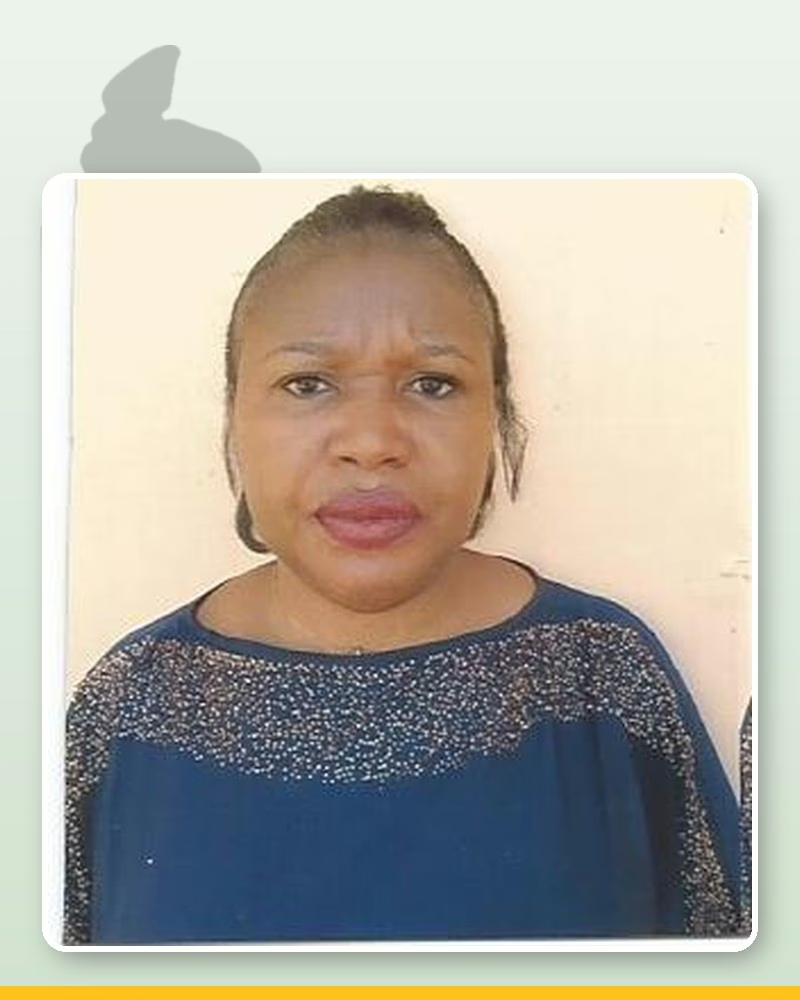
Dr. Manko Rose Rindap
Lecturer — International Relations and Strategic Studies
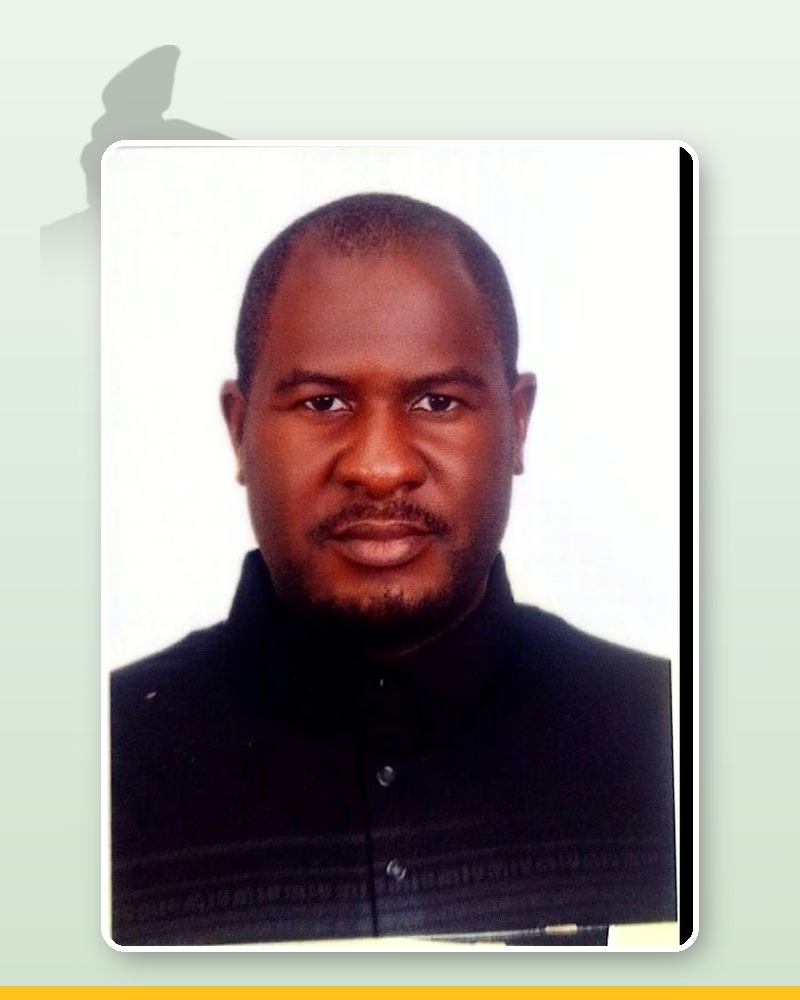
Dr. Kachi Joseph Akende
Lecturer — Public Administration

Dr. Samuel Edeh
Visiting Lecturer — International Relations and Strategic Studies
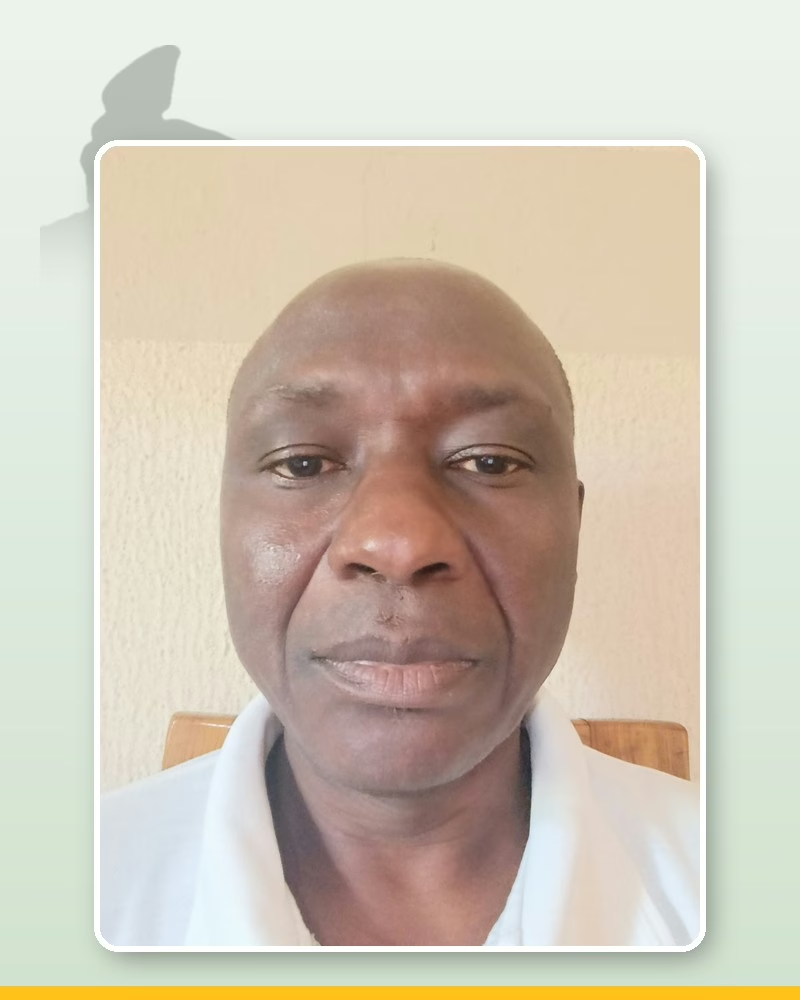
Dr. Kim Luka Dung
Lecturer — International Relations

Mr. Jonathan Nash Badung
Lecturer — Political Economy and Development Studies
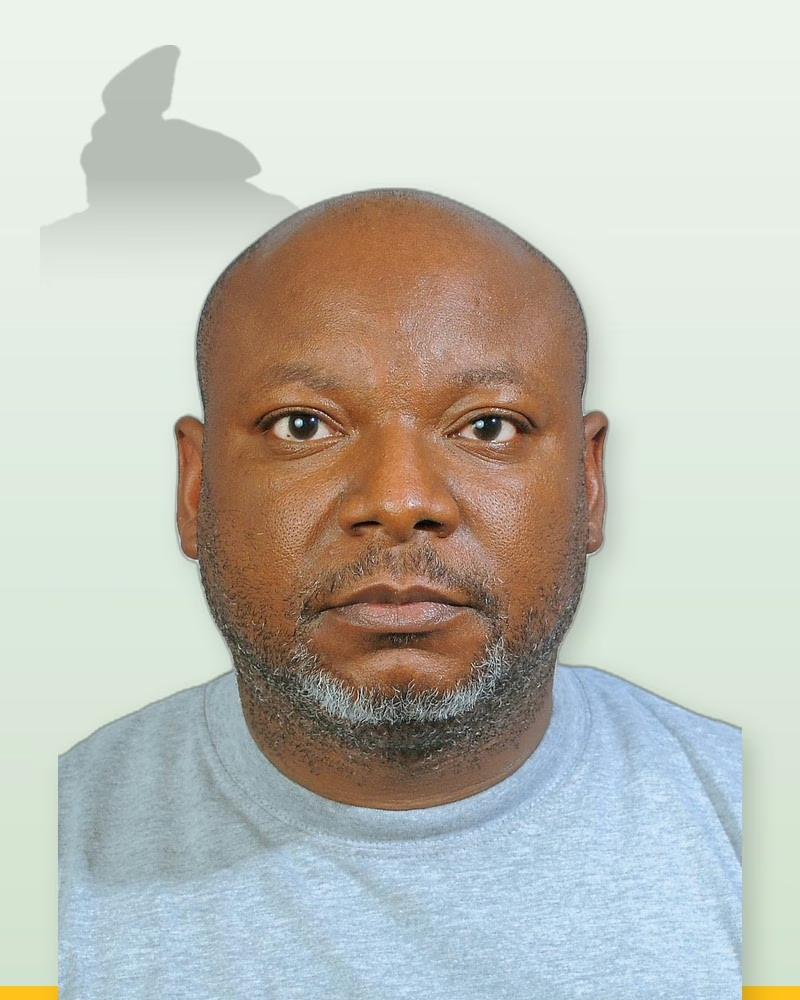
Mr. Samuel Naansuan Dawam
Lecturer — International Relations

Mr. Zang Samuel Dih
Lecturer — International Relations
Mrs. Nafisatu Isa Abdullahi
Lecturer — Political Economy

Mr. AbdLateef AbdAzeez Temitope
Lecturer — Public Policy and Administration

Mr. Vrenzak James Dawap
Lecturer — Political Economy and Development Studies
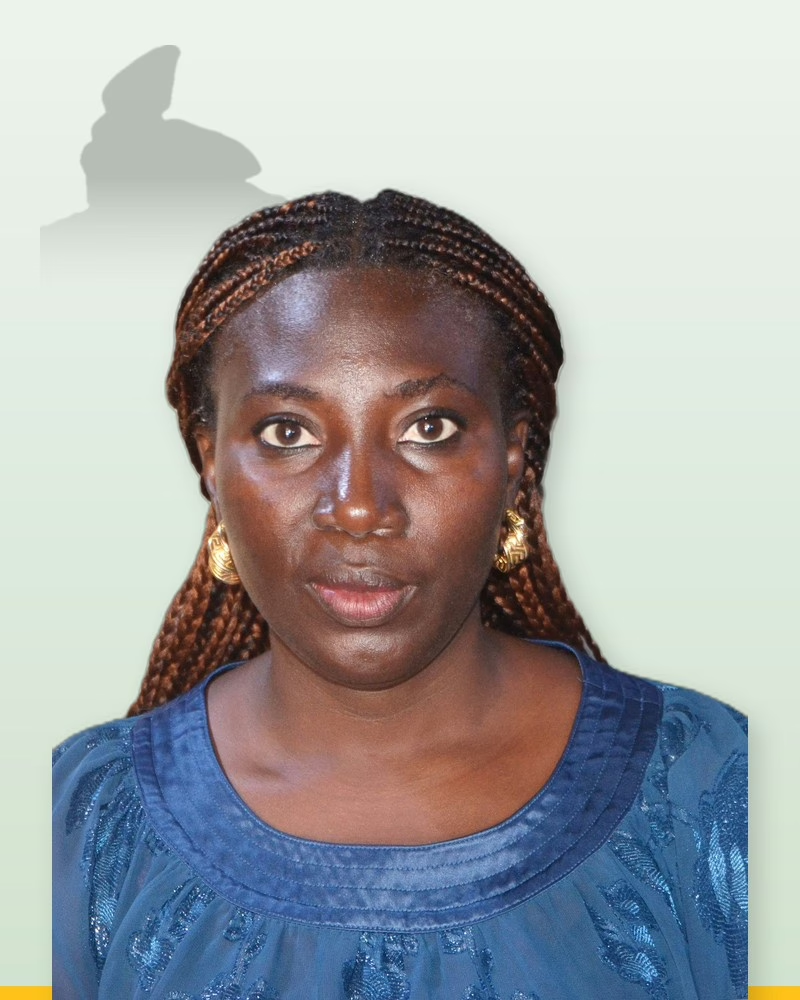
Mrs. Helen Yop Pam
Lecturer — International Relations and Strategic Studies
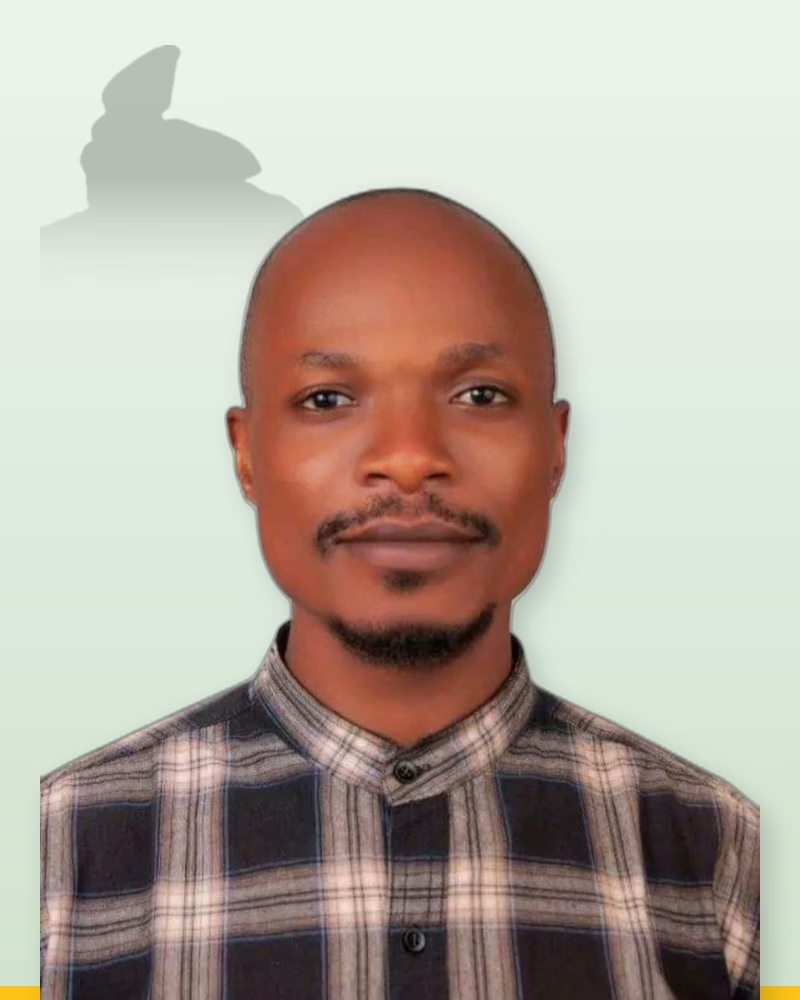
Mr. Paul Andrew Kumsat
Lecturer — International Relations and Strategic Studies
Assoc. Prof. Ishaku Bitrus Lere obtained his B.Sc. in Political Science from the University of Jos in 1998 and an M.Sc. in Political Economy and Development Studies from the same university in 2012. A trained teacher, he earned a Professional Diploma in Education at the College of Education, Gindiri (ABU-affiliated) in 2009, before completing a PhD in Political Science at Universiti Sains Malaysia, specialising in Political Economy and Development Studies. Promoted to the rank of Reader, he currently lectures in and leads the Department of Political Science, Faculty of Social Sciences, Plateau State University, Bokkos.
Begin your journey in Political Science
Join the next generation of political scientists at Plateau State University, Bokkos.