

Department
Psychology
Introduction to Psychology
About the Department
The Department of Psychology applies psychological knowledge to problems arising in the private and public domains of human endeavour. Established in the 2005/2006 academic session at the University’s permanent site in Bokkos, the Department offers a four-year (eight-semester) B.Sc. Psychology programme delivered through a student-friendly, interactive learning approach with practical demonstrations. Our academic staff teach and research across clinical, organisational, health, forensic and social psychology as well as psychometrics — preparing graduates for postgraduate specialization and careers in health, education, industry, security and public service. The Department is led by Dr. Dauda Akwai Saleh.
Academic Staff
Semesters — B.Sc. Psychology
Areas of Specialization
Program Summary
-
Study Level
BSc. Psychology -
Study Duration
8 Semesters -
Mode of study
Blended Learning - Tuition per session
-
Established
2005/2006 Session
Admission Requirements
Entry Requirements — B.Sc. Psychology
UTME — 100 Level
At least five O’Level credit passes including English Language, Mathematics, and Biology or Health Science, plus two other subjects from the arts, commerce, social sciences or natural sciences — together with an acceptable UTME score.
UTME Subjects
English Language, Mathematics and Biology are compulsory UTME subjects, together with any other subject from the arts, social sciences or sciences.
Direct Entry — Three-Year Programme
Two A-Level passes from Biology, Chemistry, Mathematics or Physics, or from Economics, Business Studies, Geography, English Literature, History or Religious Studies; a recognised National Diploma at Upper Credit or above; or nursing qualifications (SRP/NRN with Midwifery Certificate) plus five years’ professional experience — all with the O’Level requirements.
Curriculum
Departmental Courses (Compulsory and Required)
The B.Sc. Psychology curriculum runs over eight semesters and combines compulsory and required psychology courses with general studies courses and electives. Expand each level below to see the full course list.
Semester | 1st | 2nd | |||||
S/N | Course Code | Course Title | Credit Unit | Credit Unit | |||
1 | PSY 110 | Introduction to Statistical Methods in Psychology | 2 | ||||
2 | PSY 111 | Introduction to Psychology I | 2 | ||||
3 | PSY 121 | Introduction to Psychology II | 2 | ||||
4 | PSY 112 | History of Psychology | 2 | ||||
5 | PSY 113 | Quantitative Methods in Psychology | 2 | ||||
6 | PSY 123 | Qualitative Methods in Psychology | 2 | ||||
7 | PSY 114 | Learning Process I | 2 | ||||
8 | PSY 124 | Learning Process II | 2 | ||||
9 | PSY 125 | Introduction to Psychological Research | 2 | ||||
10 | PSY 122 | Determinants of Behaviour | 2 | ||||
11 | PSY 115 | Ethics in Psychology | 2 | ||||
12 | GST 110 | Communication in English | 2 | ||||
13 | GST 120 | Nigerian peoples and culture | 2 | ||||
14 | PSY 126 | Sports Psychology | 2 | ||||
Electives (Any One of These) | |||||||
15 | POL 112 | Introduction to political science | 3 | ||||
16 | ECO 112 | Introduction to Economic theory and principles | 2 | ||||
17 | BUS 112 | Introduction to Business I | 2 | ||||
General Studies Courses (GST) | |||||||
SEMESTER TOTALS: | 16 (17) | 14 | |||||
TOTAL: | 30 (31) | ||||||
ELECTIVES: A student shall take at least one (1) elective from any of the faculty departments’ courses listed in the “electives” section above. | |||||||
Semester | 1st | 2nd | ||
S/N | Course Code | Course Title | Credit Unit | Credit Unit |
1 | PSY 212 | General Experimental Psychology I | 2 | |
2 | PSY 213 | Physiological Psychology I | 2 | |
3 | PSY 224 | Industrial /Organizational Psychology | 2 | |
4 | PSY 215 | Introduction to social Psychology | 2 | |
5 | PSY 216 | Developmental Psychology I: Childhood & Adolescence | 2 | |
6 | PSY 226 | Developmental Psychology II: Adulthood & Aging | 2 | |
7 | PSY 217 | Psychology of ethnicity and ethnic group | 2 | |
8 | PSY 227 | Psychology of Personality and Assessment | 2 | |
9 | PSY 229 | Positive Psychology | 2 | |
10 | PSY 228 | Health Psychology | 2 | |
11 | PSY 211 | Computer Application to Statistical Methods in Psychology I | 2 | |
12 | PSY 221 | Computer Application to Statistical Methods in Psychology II | 2 | |
13 | ENT 211 | Introduction to entrepreneurship and Innovation | 2 | |
14 | GST 212 | Philosophy, logic and Human Existence | 2 | |
15 | SSC 202 | Introduction to Computer and its Application | 3 | |
SEMESTER TOTALS: | 19 | 12 | ||
TOTAL: | 31 | |||
ELECTIVES | ||||
1 | PSY 220 | Principles of criminology and Juvenile delinquency | 2 | |
2 | PSY 219 | Experimental Design | 2 | |
ELECTIVES: Elective courses are not compulsory; they shall be taken at the discretion of a student who desires knowledge in those areas, thus accruing more credit units than the stipulated minimum. | ||||
Semester | 1st | 2nd | ||
S/N | Course Code | Course Title | Credit Unit | Credit Unit |
1 | PSY 311 | Statistical Methods in Psychology | 2 | |
2 | PSY 321 | Computer Application to Qualitative methods in Psychology | 2 | |
3 | PSY 312 | Clinical Psychology | 2 | |
4 | PSY 322 | Psychology of Mental Challenge | 2 | |
5 | PSY 325 | Field Experience | 2 | |
6 | PSY 318 | Cognitive Psychology | 2 | |
7 | PSY 324 | Environmental Psychology | 2 | |
8 | PSY 315 | Psychological testing and Test construction | 2 | |
9 | PSY 313 | Gender Psychology | 2 | |
10 | PSY 326 | Psychology of substance Use Disorder | 2 | |
11 | PSY 328 | Research Methods in Psychology | 2 | |
12 | GST 312 | Peace and Conflict Resolution | 2 | |
13 | ENT 312 | Venture Creation | 2 | |
14 | SSC 301 | Innovation in the Social Sciences | 2 | |
15 | SSC 302 | Research Method I | 2 | |
SEMESTER TOTALS: | 18 | 12 | ||
TOTAL: | 30 | |||
ELECTIVES | ||||
1 | PSY 320 | Cross-Cultural Psychology | 2 | |
2 | PSY 323 | Psychometrics | 2 | |
3 | PSY 314 | Sensory Process | 2 | |
ELECTIVES: Elective courses are not compulsory; they shall be taken at the discretion of a student who desires knowledge in those areas, thus accruing more credit units than the stipulated minimum. | ||||
Semester | 1st | 2nd | ||
S/N | Course Code | Course Title | Credit Unit | Credit Unit |
1 | PSY 411 | Advanced Clinical Psychology | 2 | |
2 | PSY 412 | Psychology of Terrorism and Trauma Management | 2 | |
3 | PSY 413 | Advanced Psychobiological Study of Behaviour and Psychopharmacology | 2 | |
4 | PSY 424 | Psychology of Social Change | 2 | |
5 | PSY 414 | Social perception | 2 | |
6 | PSY 415 | Practicum in Psychotherapy I | 2 | |
7 | PSY 423 | G & C Psychology | 2 | |
8 | PSY 425 | Practicum in Psychotherapy II | 2 | |
9 | PSY 418 | Organizational Psychology I | 2 | |
10 | PSY 417 | Consumer Psychology | 2 | |
11 | PSY 419 | Forensic Psychology | 2 | |
12 | PSY 428 | Organizational Psychology II | 2 | |
13 | PSY 426 | Research Project | 4 | |
14 | SSC 401 | Research Method II | 2 | |
SEMESTER TOTALS: | 18 | 12 | ||
TOTAL: | 30 | |||
ELECTIVES | ||||
1 | PSY 420 | Behaviour Modification | 2 | |
2 | PSY 416 | Current Issues in Psychology | 2 | |
3 | PSY 427 | Psychology of Vocational Behaviour | 2 | |
4 | PSY 422 | Correctional Psychology | 2 | |
5 | PSY 421 | Political Psychology | 2 | |
ELECTIVES: Elective courses are not compulsory; they shall be taken at the discretion of a student who desires knowledge in those areas, thus accruing more credit units than the stipulated minimum. | ||||
Note: i) Local content in bold italics.
- ii) Except for 100 level where a student shall compulsorily take at least one elective, elective courses at the other levels shall be taken at the discretion of a student who desires knowledge in those areas.
iii) Course codes of core departmental courses from NUC were modified to align with the institution’s pattern of middle digit representing the semester in which the course shall be taken.
Careers
Career Prospects
While professional practice in Psychology requires postgraduate training in an area of specialization, a first degree in Psychology opens a wide range of career paths, including:
- Teaching and research — universities, polytechnics and colleges of education
- Clinical and counselling services — hospitals, psychiatric clinics and medical colleges
- Administration and management — federal, state and local government and parastatals
- Personnel and managerial roles in private industry and business organisations
- Defence and security — Armed Forces, Police and intelligence organisations
- Rehabilitation and correctional services
- Organisational training and orientation programmes
FAQs
Frequently Asked Questions
A Bachelor of Science (B.Sc.) in Psychology — a four-year, 8-semester programme delivered through blended learning at the Bokkos campus.
Through UTME: at least five O’Level credits including English Language, Mathematics, and Biology or Health Science, plus an acceptable UTME score with English, Mathematics and Biology as compulsory subjects. Through Direct Entry: two relevant A-Level passes, a recognised ND at Upper Credit, or approved nursing qualifications. Full details are in the Entry Requirements section above.
Psychology graduates build careers in teaching and research, clinical and counselling services, administration and management, private industry, defence and security, and rehabilitation and correctional services — with postgraduate training opening professional specializations such as clinical, organisational and forensic psychology.
Choose Psychology at Plateau State University in your JAMB registration, or apply directly through the university’s admission portal using the Apply for Admission button on this page.
Dr. Dauda Akwai Saleh, a Senior Lecturer and clinical psychologist, is the Head of the Department of Psychology.
Use the university contact page at plasu.edu.ng/contact — the Contact the Department button on this page will take you there.
Our People
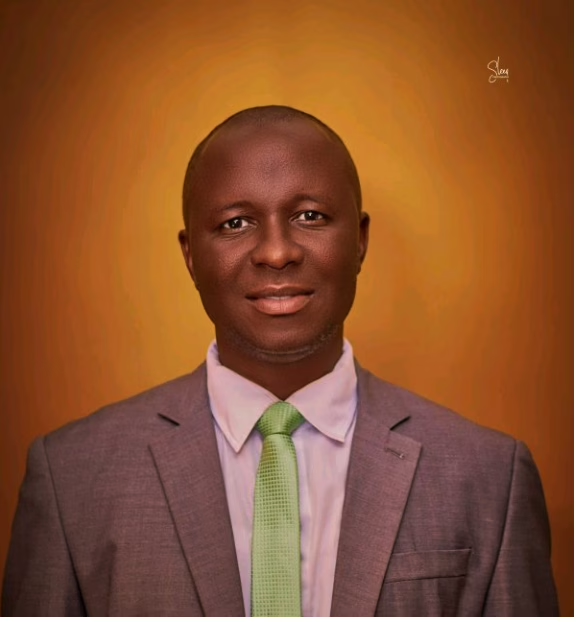
Dr. Dauda Akwai Saleh
Head of Department
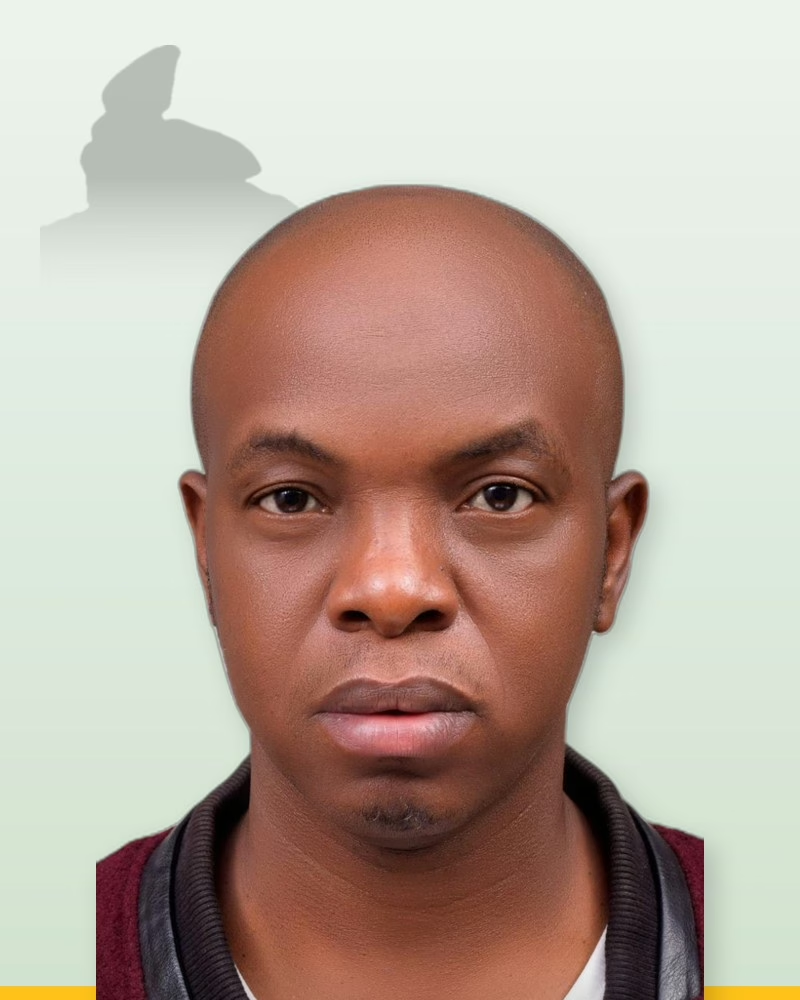
Dr Ismaila Yakubu
Lecturer — Health and Organisational Psychology

Ishaku Fwangshak Duguryil
Lecturer — Psychometrics
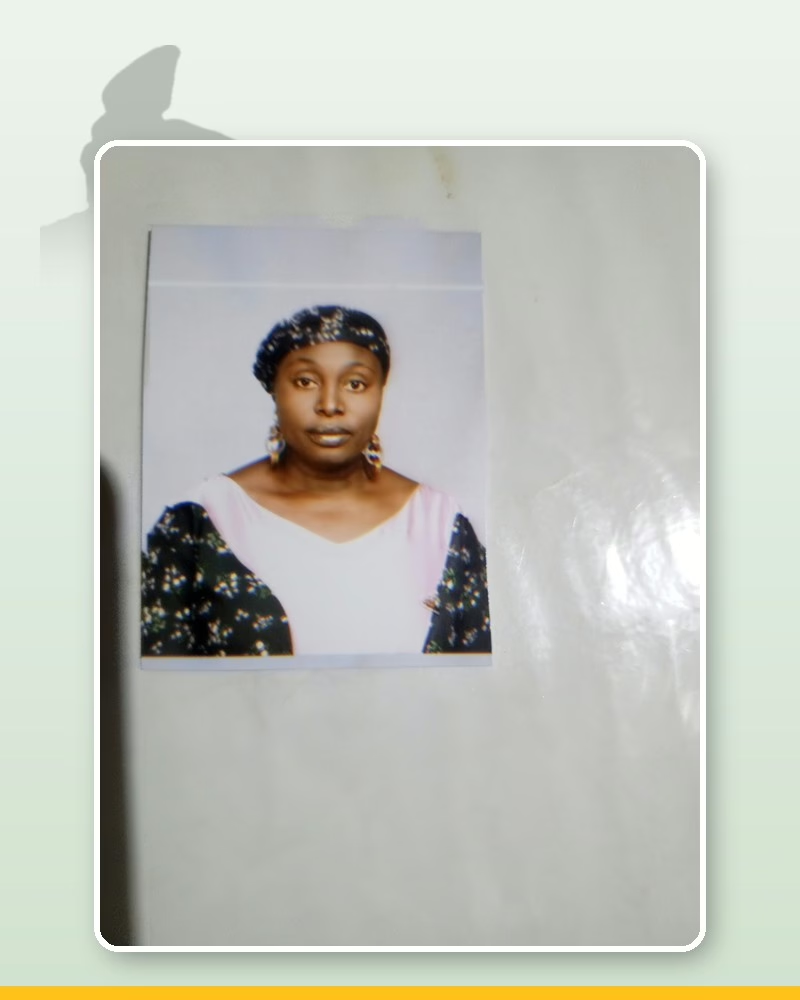
Mrs — Clinical Psychology
Lecturer — Clinical Psychology

Ms. Gonten Wakdam Munporitgak
Lecturer — Forensic Psychology
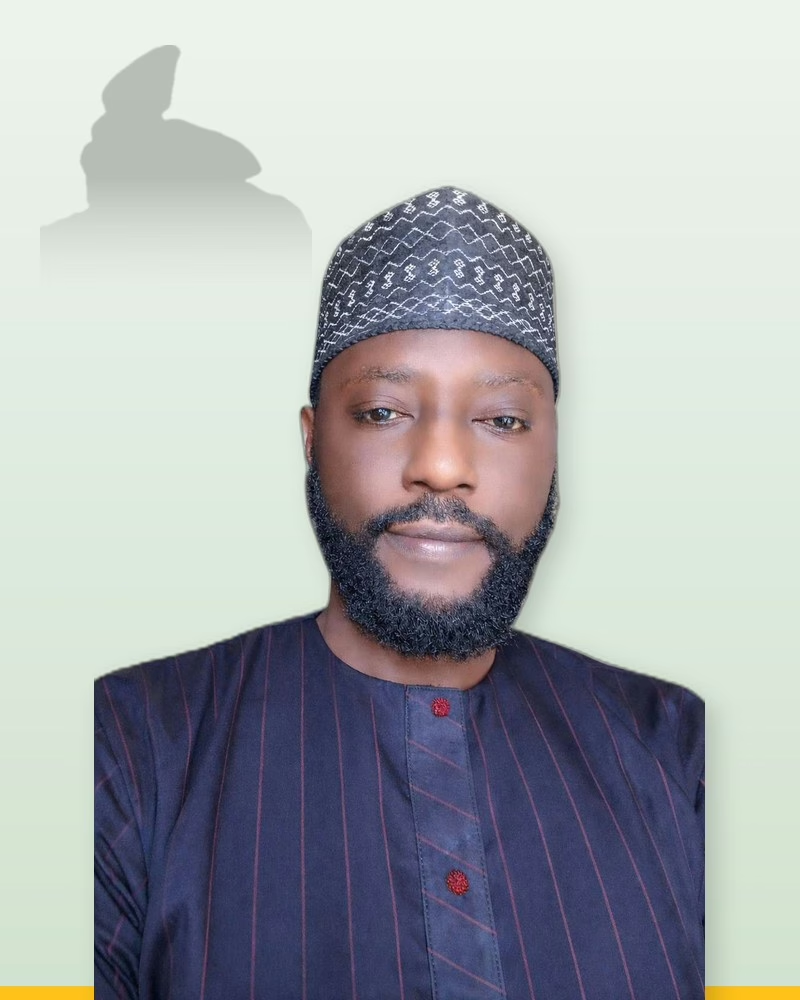
Dr. Emmanuel Eche Ojih
Lecturer — Organisational Psychology
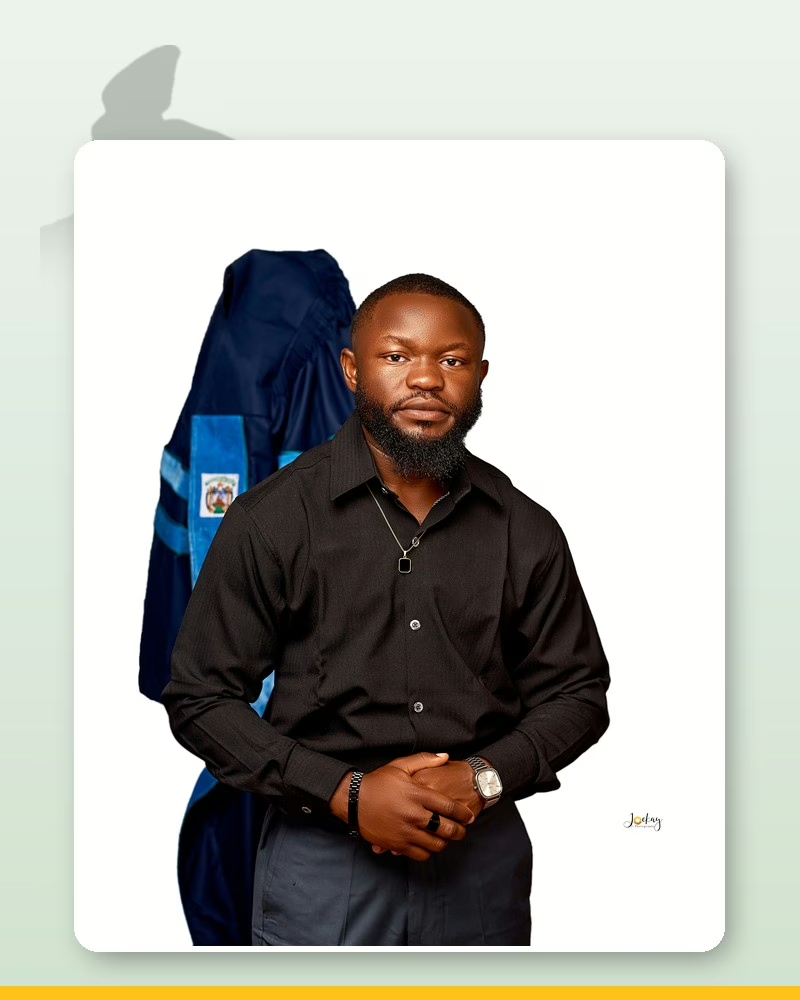
Mr. Lokrit Clement Gonap
Lecturer — Social Psychology

Pam Henry Dung
Lecturer — Organizational Psychology
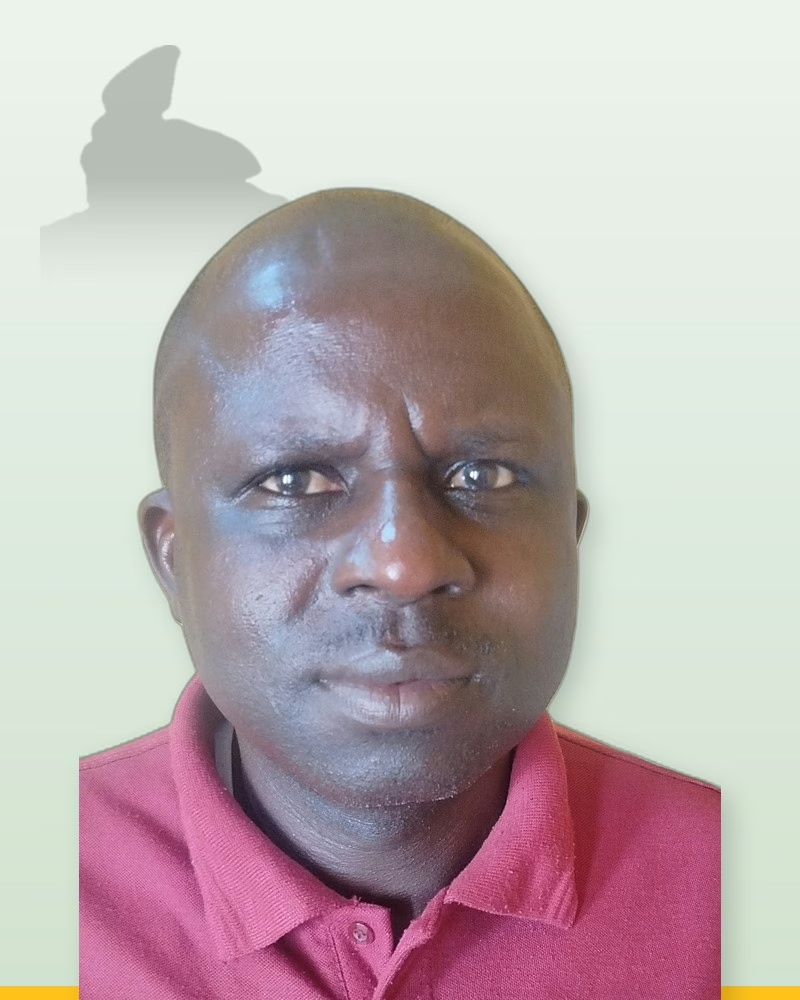
Dr. Jonah Zumlong Damilep
Lecturer — Clinical Psychology
Dr. Dauda Akwai Saleh is a Senior Lecturer and Head of the Department of Psychology, Plateau State University, Bokkos. He holds a PhD in Clinical Psychology from the University of Jos, and his research focuses on sexual dysfunction, trauma, substance abuse, psychotherapy and mental health. He has published 30 papers in reputable local and international journals and presented widely at workshops and conferences. A member of the Nigerian Psychological Association and adjunct faculty at ECWA Theological Seminary Jos, he served on the GIZ PEACECORE peace-building projects in Nigeria’s Middle Belt.
Begin your journey in Psychology
Join the next generation of psychologists at Plateau State University, Bokkos.